





Listen & Understand
Engage with workers, MSMEs, vendors, and communities to understand lived realities, needs, and aspirations.


A Place-Based Just Transition begins with a simple but critical question.
Who carries the cost of transition, and who decides how it happens?
Just Transition is often discussed as a global policy idea related to climate targets, energy shifts, or green investments. But for workers and communities, transition is experienced differently. It appears in changes to income, working conditions, access to resources, and dignity.
Across most value chains, the most significant risks are concentrated at the last tier — informal workers, MSMEs, vendors, and marginalised communities. These are the groups that are severely impacted by environmental damage, have vulnerable livelihoods, and experience the most disruptive transitions in the value chain.
Global Goals & Policies
Climate goals, international frameworks
Industries & Value Chains
Corporate strategies, market forces
Suppliers & MSMEs
Small businesses, local enterprises
Last Tier: Informal Workers, Vendors & Marginalised Communities
Most vulnerable, least visible
Concentrated Risk & Vulnerable Livelihoods
Environmental damage, income loss, insecure work, displacement
Engage with workers, MSMEs, vendors, and communities to understand lived realities, needs, and aspirations.
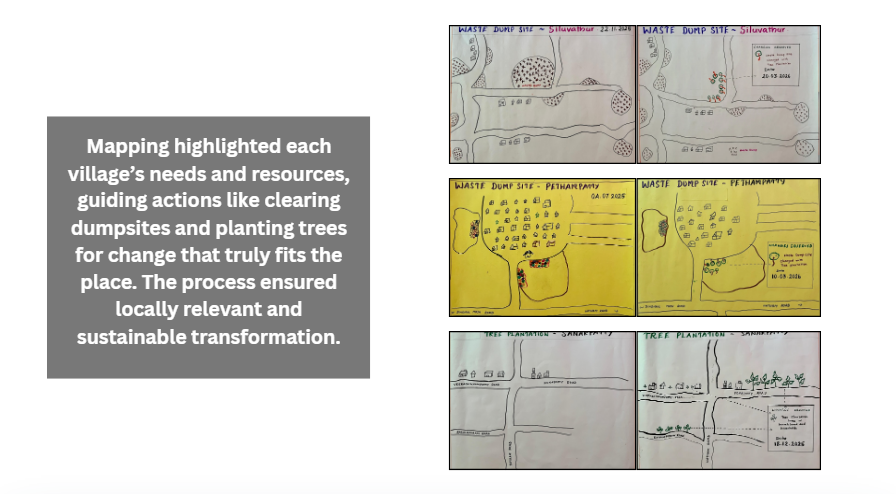
Map local ecological, economic, and social contexts. Identify vulnerabilities, risks, and existing strengths.
Ensure meaningful participation of workers, informal labour, MSMEs, women, youth, and marginalised groups in decision-making.
Co-create locally relevant strategies that balance environmental goals with livelihoods, dignity, and equity.
Strengthen capacities, mobilise resources, and support just transition actions on the ground.
Track impacts together, learn continuously, and adapt for long-term resilience.

PBJT recognises that environmental change and economic transition are not abstract ideas, they are lived every day in villages, neighbourhoods, worksites, and local production clusters.
PBJT focuses on how workers, MSMEs, vendors, informal labour, and communities experience climate action, sustainability policies, and business practices at the last tiers of the value chain. These are the places where risk concentrates and visibility is lowest.
A transition can only be called “green” when it also protects people. As workers often remind us, environmental improvements must go hand in hand with fair wages, safety, dignity, and secure livelihoods.